Tavli press kit
Portes, plakoto and fevga, the three games of the Greek kafeneio, on a board built in three dimensions. For iPhone, iPhone Duo and iPad.
In one line
Tavli is the Greek kafeneio's three games on a board that folds where iPhone Duo folds.
In a paragraph
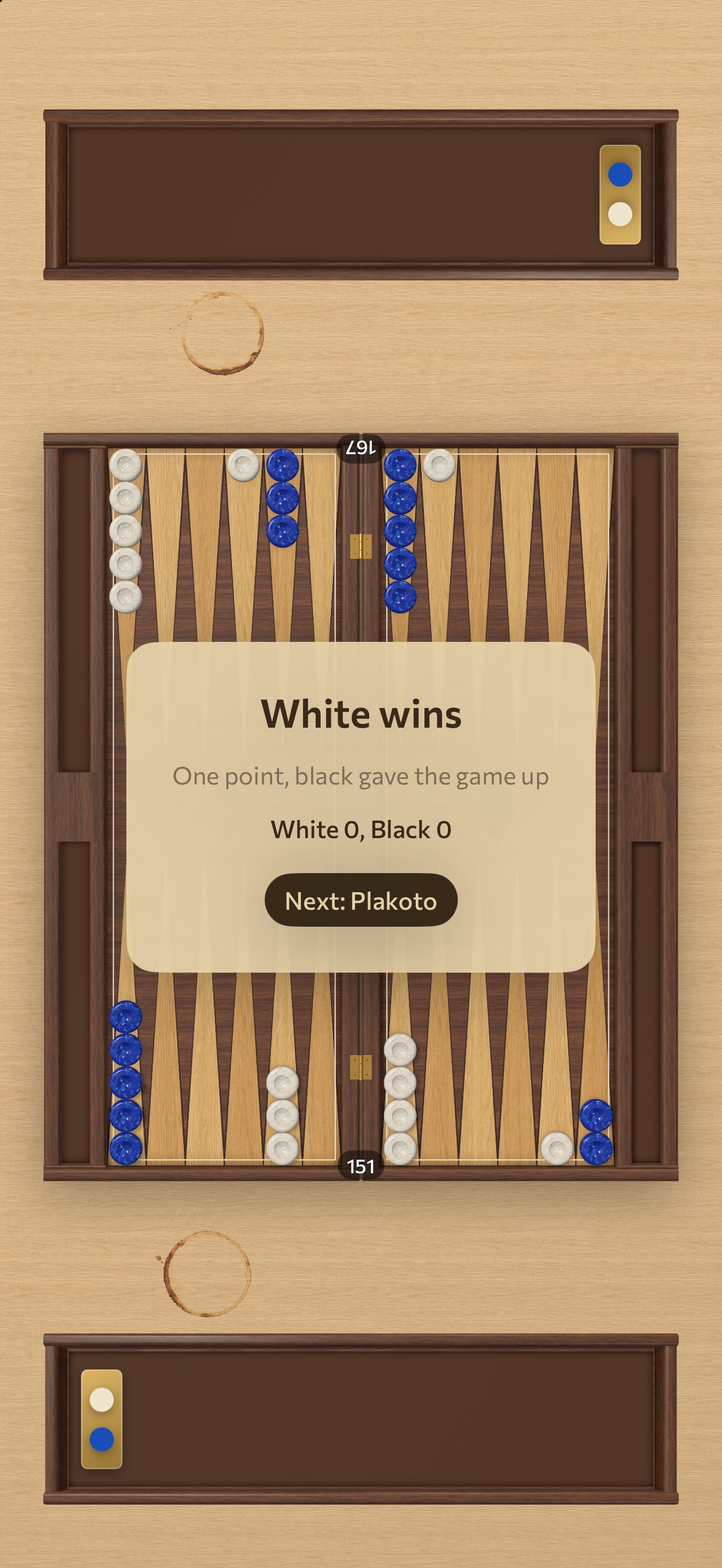
Tavli is portes, plakoto and fevga, the three games Greeks play on one board, in one app: each with its own rules, under its own name, against the computer, against the person opposite you, or against anyone through Game Center. The board is built in three dimensions out of wood, marble, leather and metal, and the dice are thrown by a physics simulation rather than picked from a list. Every match's dice are fixed before the first roll and revealed with a proof at the end, so a player who suspects the dice can check them. The whole board plays with VoiceOver. On iPhone Duo the bar lies on the hinge, and the phone can be laid flat on a table between two players, each with their own dice tray facing them. Free to download, with one purchase at £5.99 and no subscriptions, no advertising and no data collected.
The story
Dimitris Kontaris is a Greek designer and design director living in London. He learned tavli on a worn board in a kafeneio, the way most Greeks do: not from a rulebook but from whoever was sitting opposite. Tavli is that board, made for the first phone shaped like it.
Most backgammon apps give you one game. Greeks play three. Portes is backgammon as Greece plays it. Plakoto never hits: land on a lone checker and it is pinned underneath yours until you leave. Fevga sends both sides the same way round, and a single checker holds a point. Played in turn, first to five or seven, the three together are tavli. An app that offers only portes offers a third of the evening.
What is in it
Three games, played properly
The rules follow the descriptions at bkgm.com, including the mother checker in plakoto, the prime and first checker rules in fevga, and the larger die when only one can be played. Every rule is covered by tests. The tavli match itself runs portes, plakoto and fevga in turn, first to five or seven.
A board, not a picture
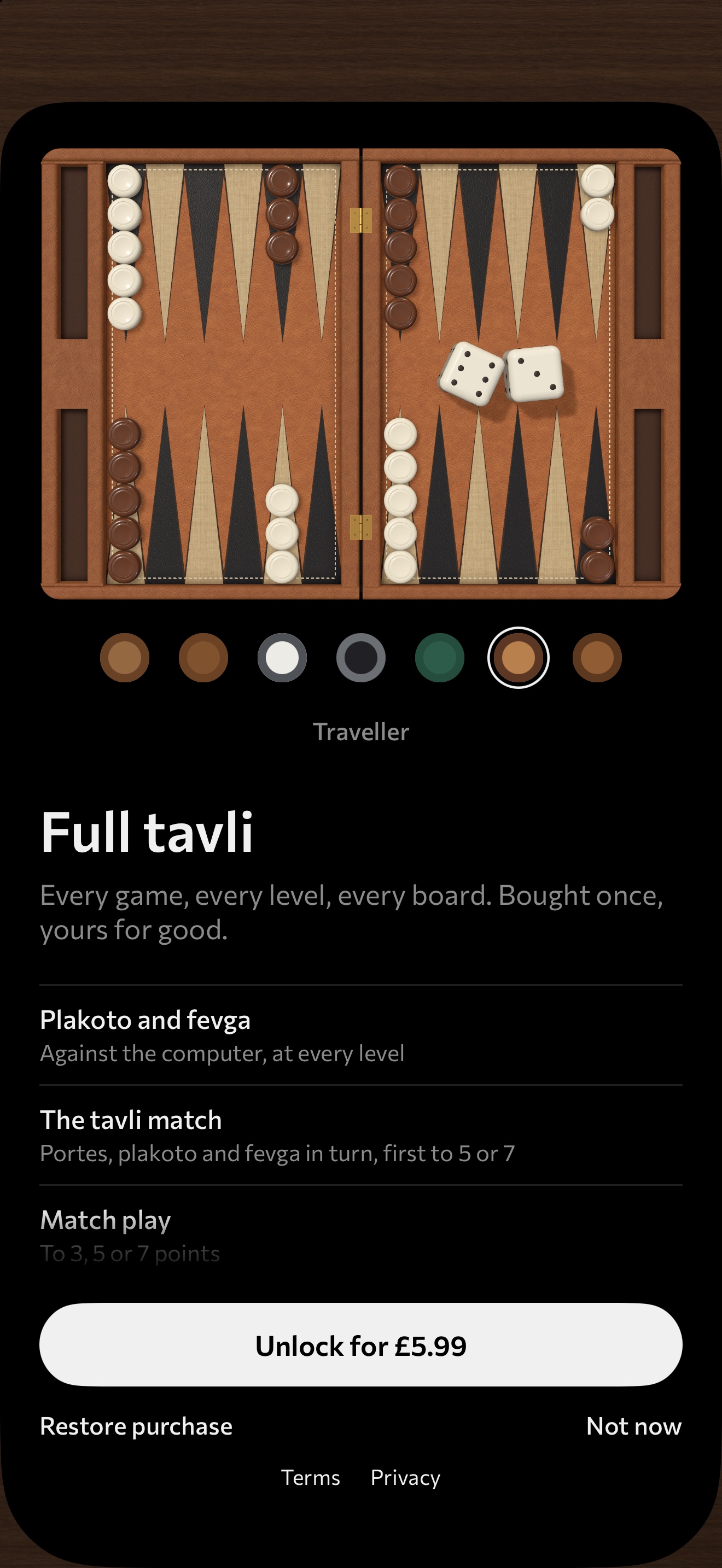
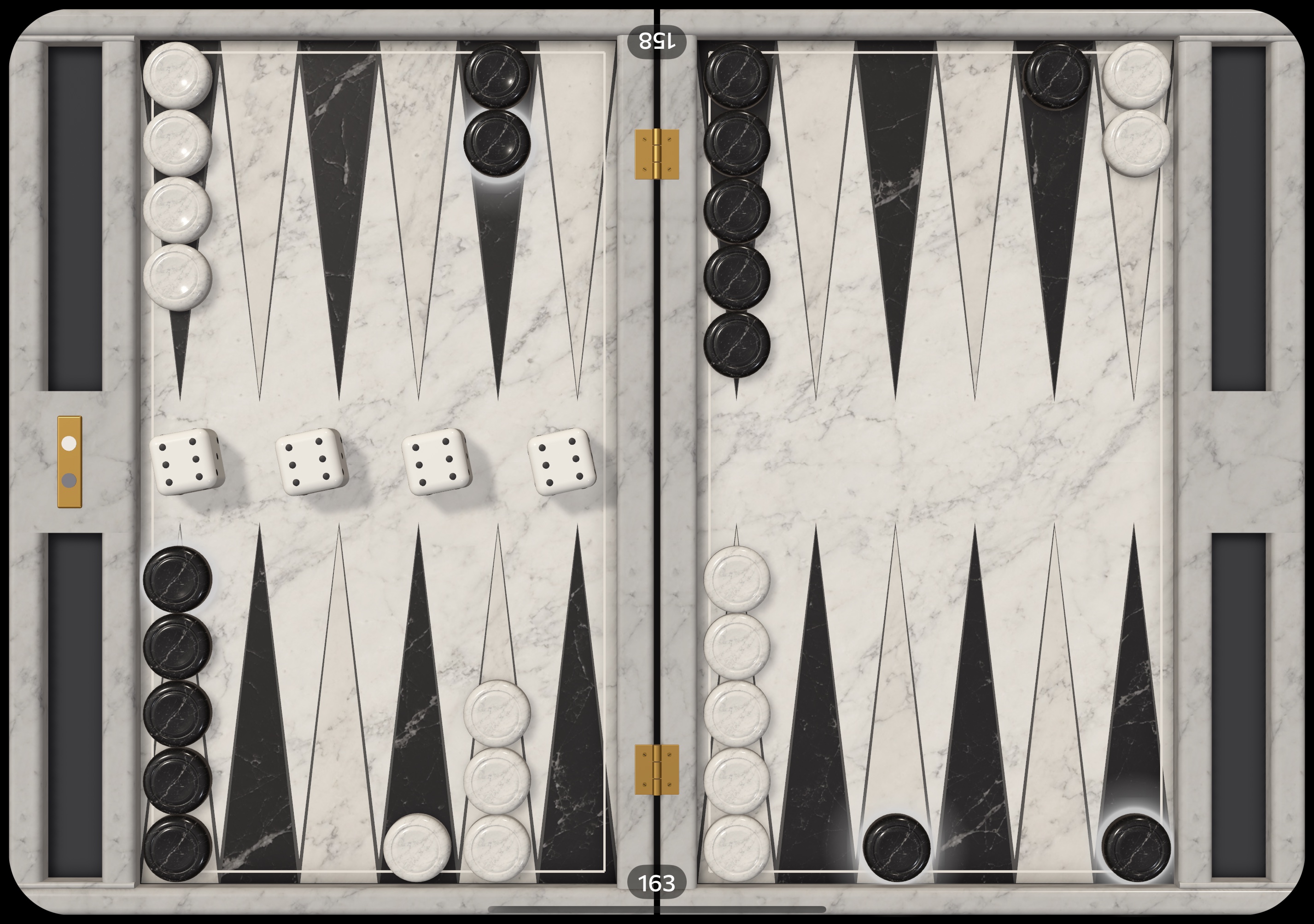
Seven boards, built rather than drawn: Classic in walnut and maple, Heritage in burr walnut, Marble in Carrara and Nero Marquina, Modernist in matte metal and black leather, Contemporary in green leather, Traveller in a tan leather case, and Kafeneio, taken from a photograph of a real kafeneio board. Checkers slide and settle into their seats; dice are thrown into the tray and bounce off the walls and each other.
Someone to play
The computer plays portes through wildbg, an open-source neural network that runs on the device, and plakoto and fevga through search written for each game, at three levels. Two people can share one device: lay it flat and each has a dice tray at their own end, facing them, with their own dice, settings and undo, and the screen stays awake while the game is on. Or play anyone through Game Center, a turn at a time.
Dice you can check
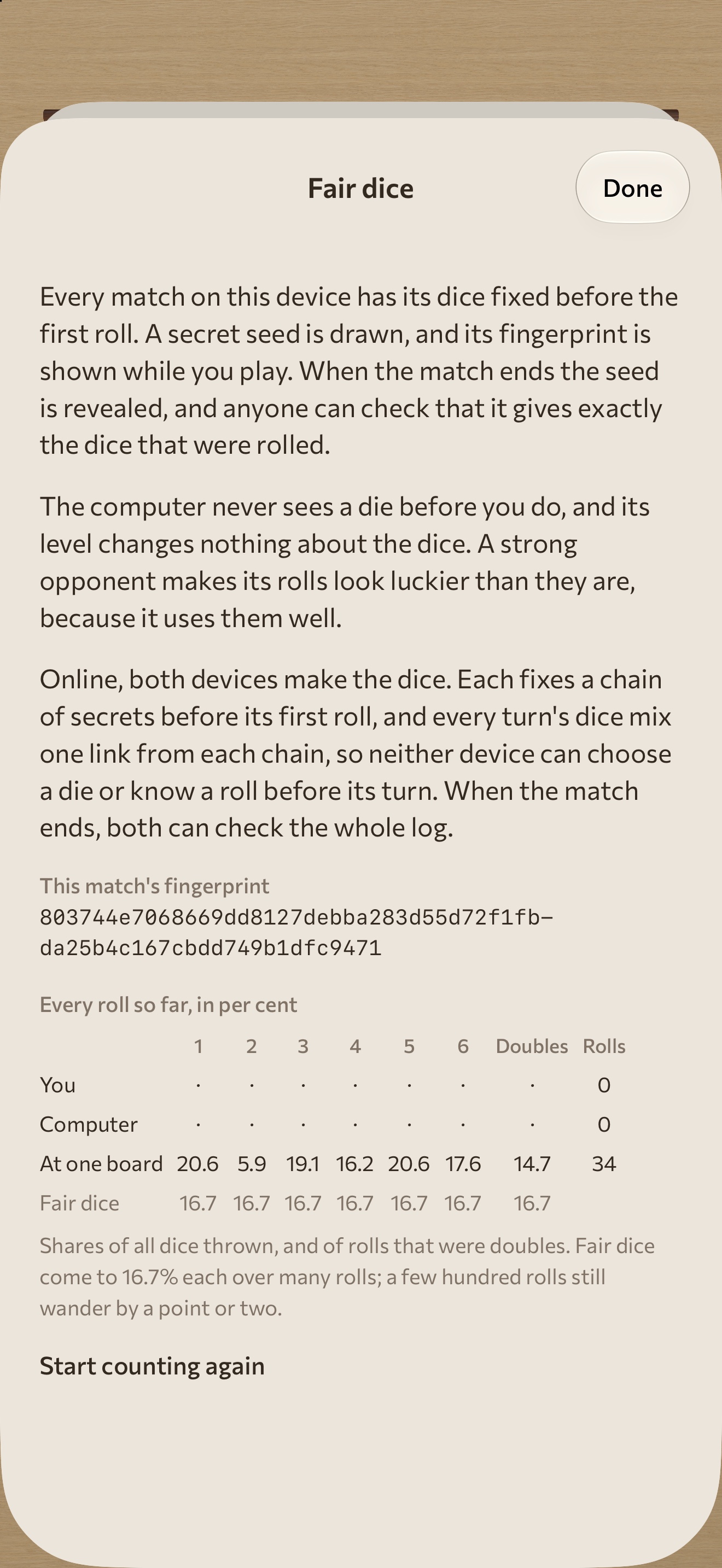
Before the first roll of a match, Tavli draws a secret seed and shows its fingerprint. Every die of that match comes from the seed and nothing else. When the match is decided the seed is revealed with every roll it made, so anyone can confirm the dice never changed. In a Game Center match neither device can choose a die: each fixes a chain of secrets in advance and every roll mixes one link from each side. The whole method is published.
Made for iPhone Duo
A tavli board is a hinged box that folds at the bar. Open iPhone Duo and the board fills the inner display with the hinge lying along the bar, exactly where a wooden board folds. Closed, the outer display turns the same board upright. Layout comes from size classes, so every pose, iPad and Split View share one board, and folding the phone mid-move never loses the game.
For everyone
The whole board plays with VoiceOver: every point, the bar and the trays are elements, a checker's legal destinations are actions, and rolls, hits, pins, turns and the end of a game are announced. Reduce Motion, Increase Contrast, Differentiate Without Colour and Dynamic Type are respected. The app is in English and Greek, with the games under their Greek names.
One price
Free to download, and the free game is a real game: portes against the computer, pass-and-play in all three games, and the Classic board. One purchase, Full tavli at £5.99, opens plakoto and fevga against the computer, every level, the tavli match and matches to three, five or seven, Game Center play, the doubling cube and the other six boards. It is shared through Family Sharing. There are no subscriptions, no advertising, no accounts and no tracking.
Screenshots
Captured from the current build. Click any image for it at full size, or download the whole kit (screenshots and the icon).
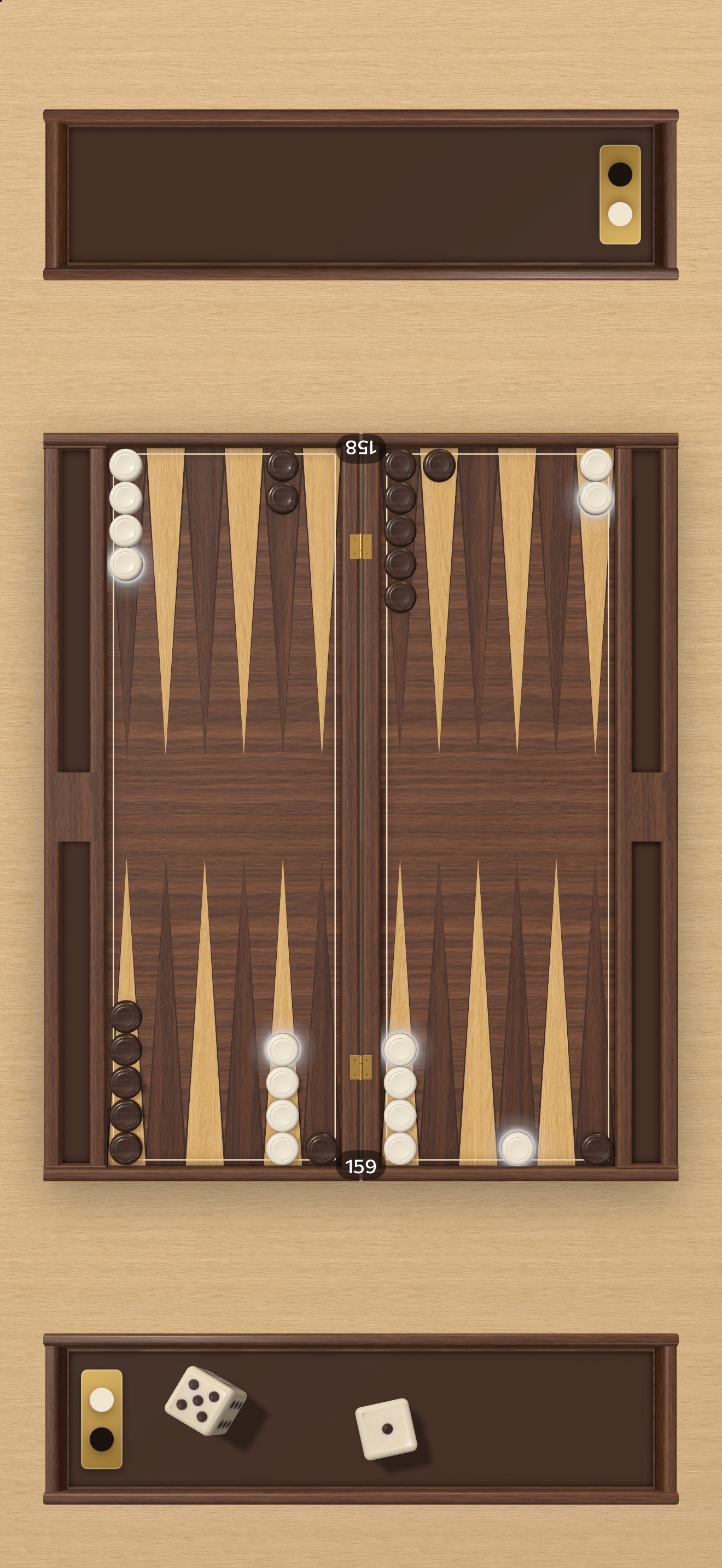
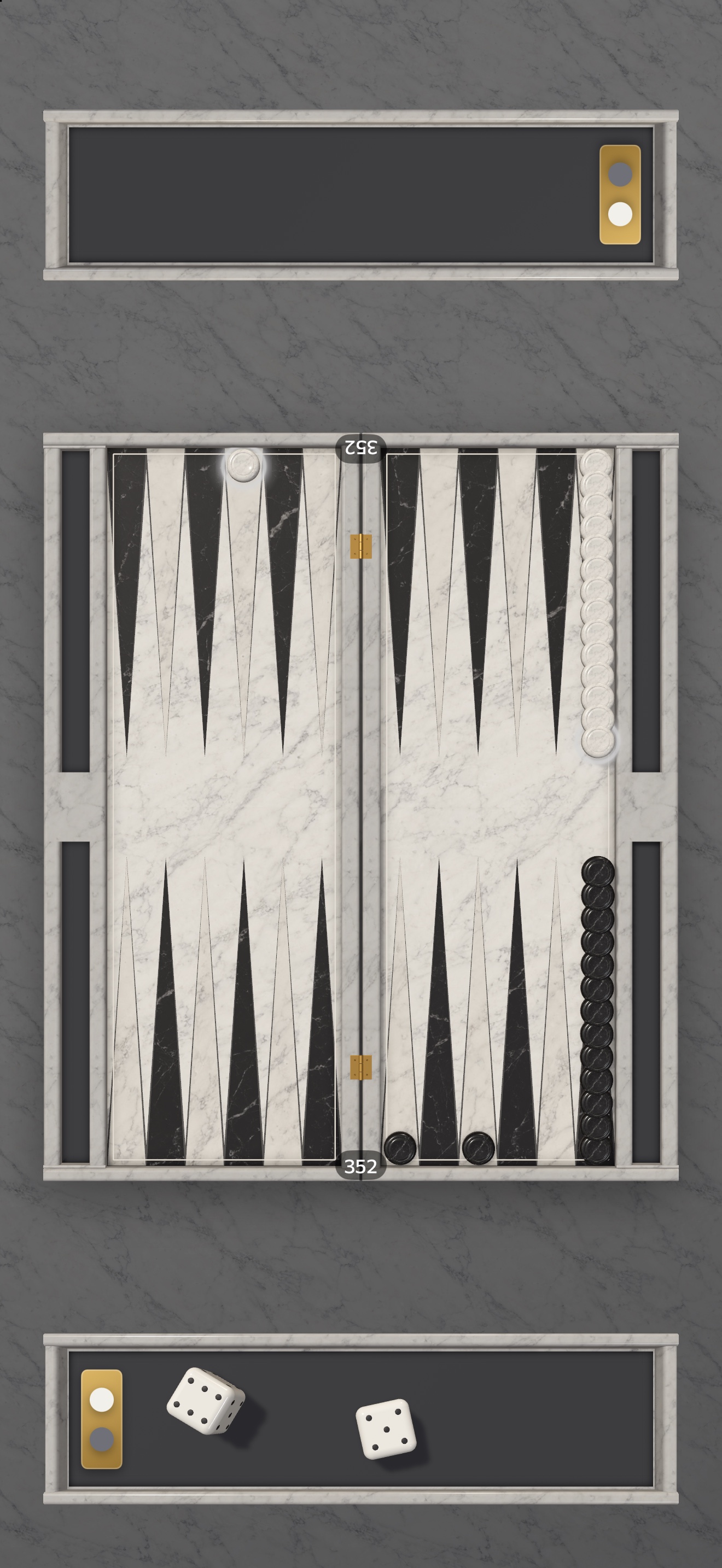
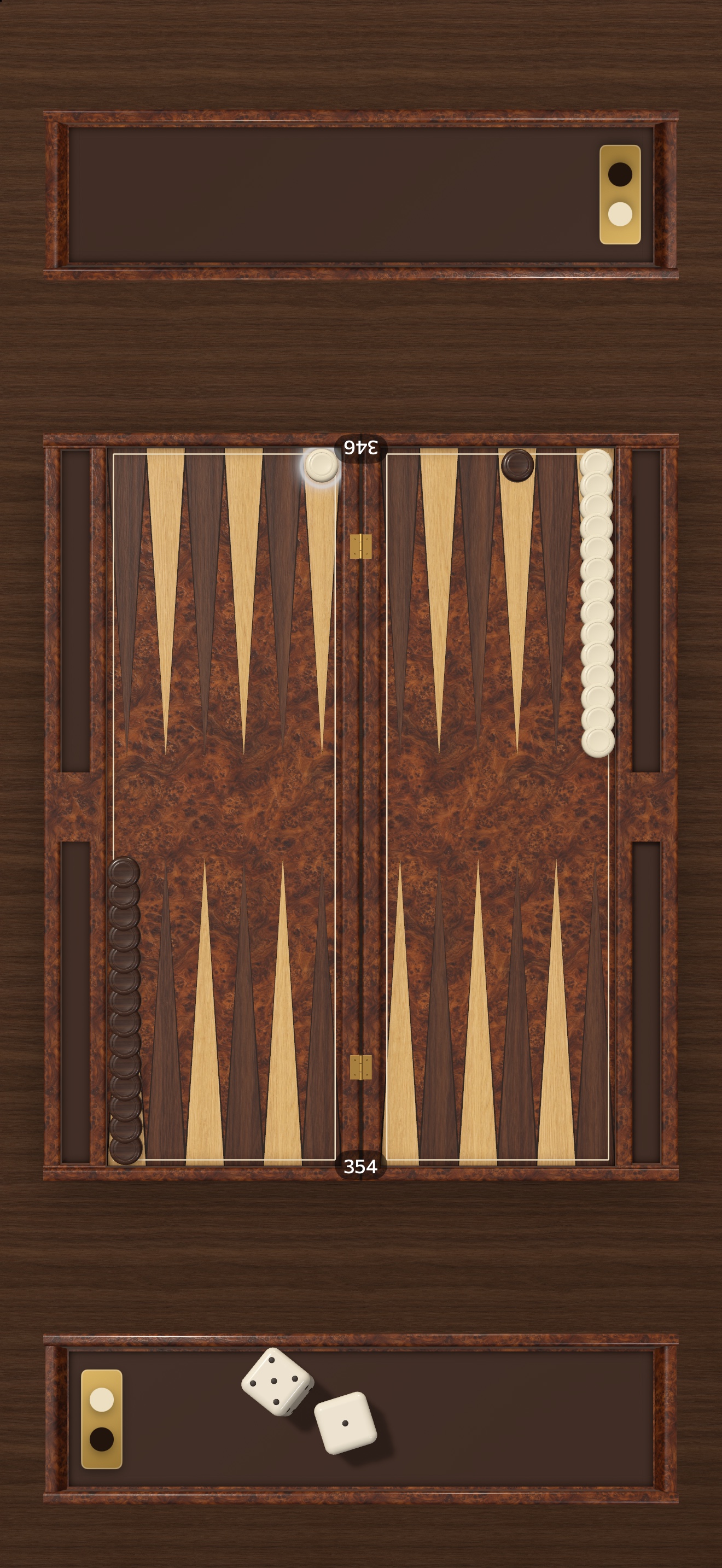
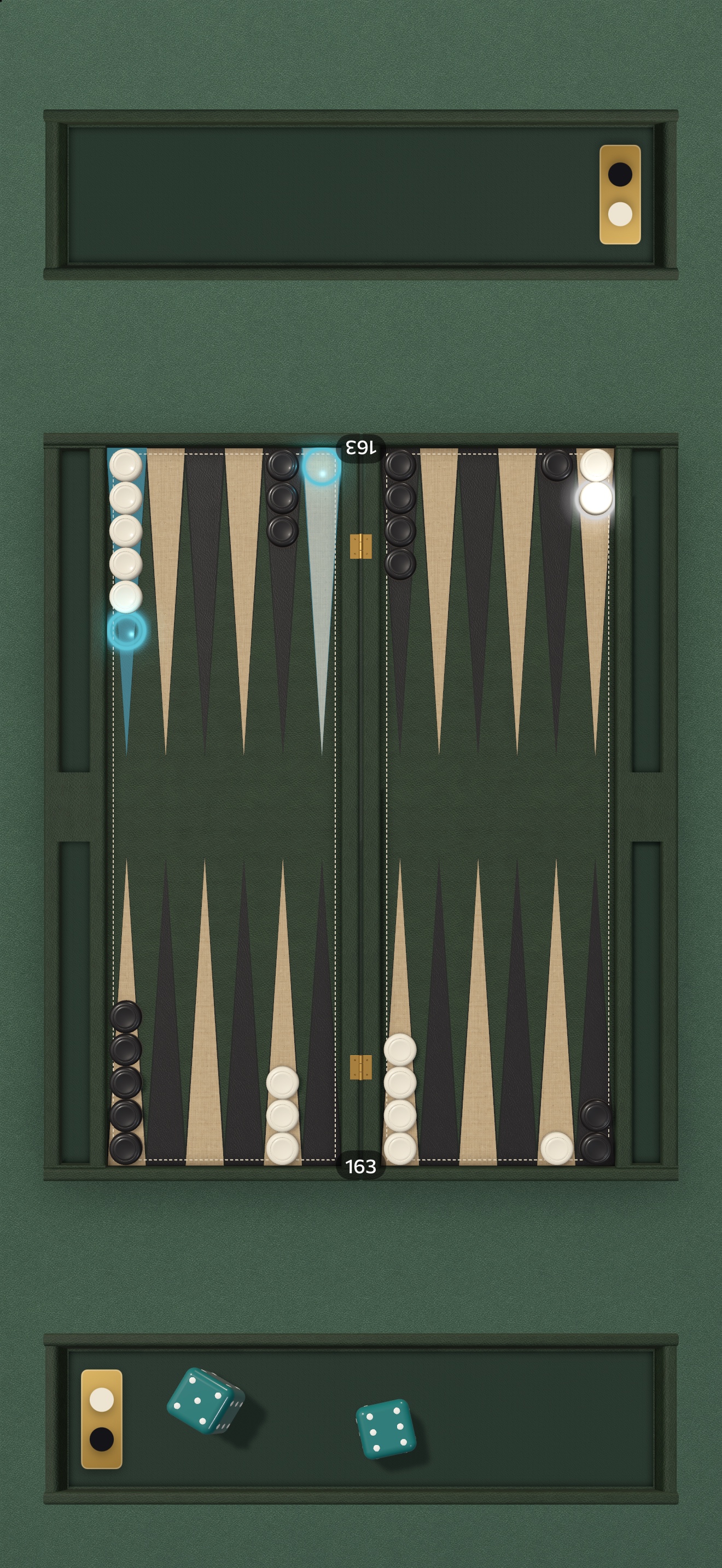
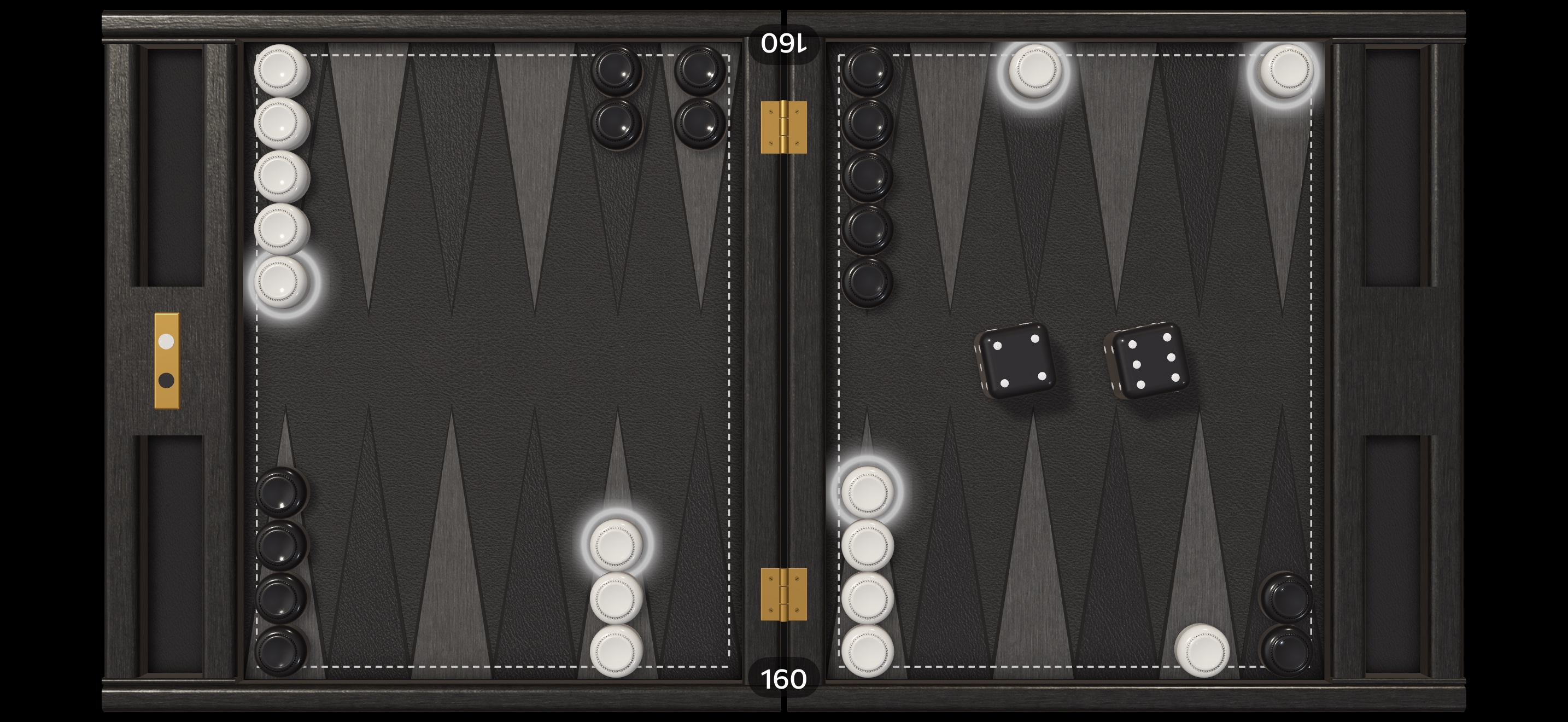
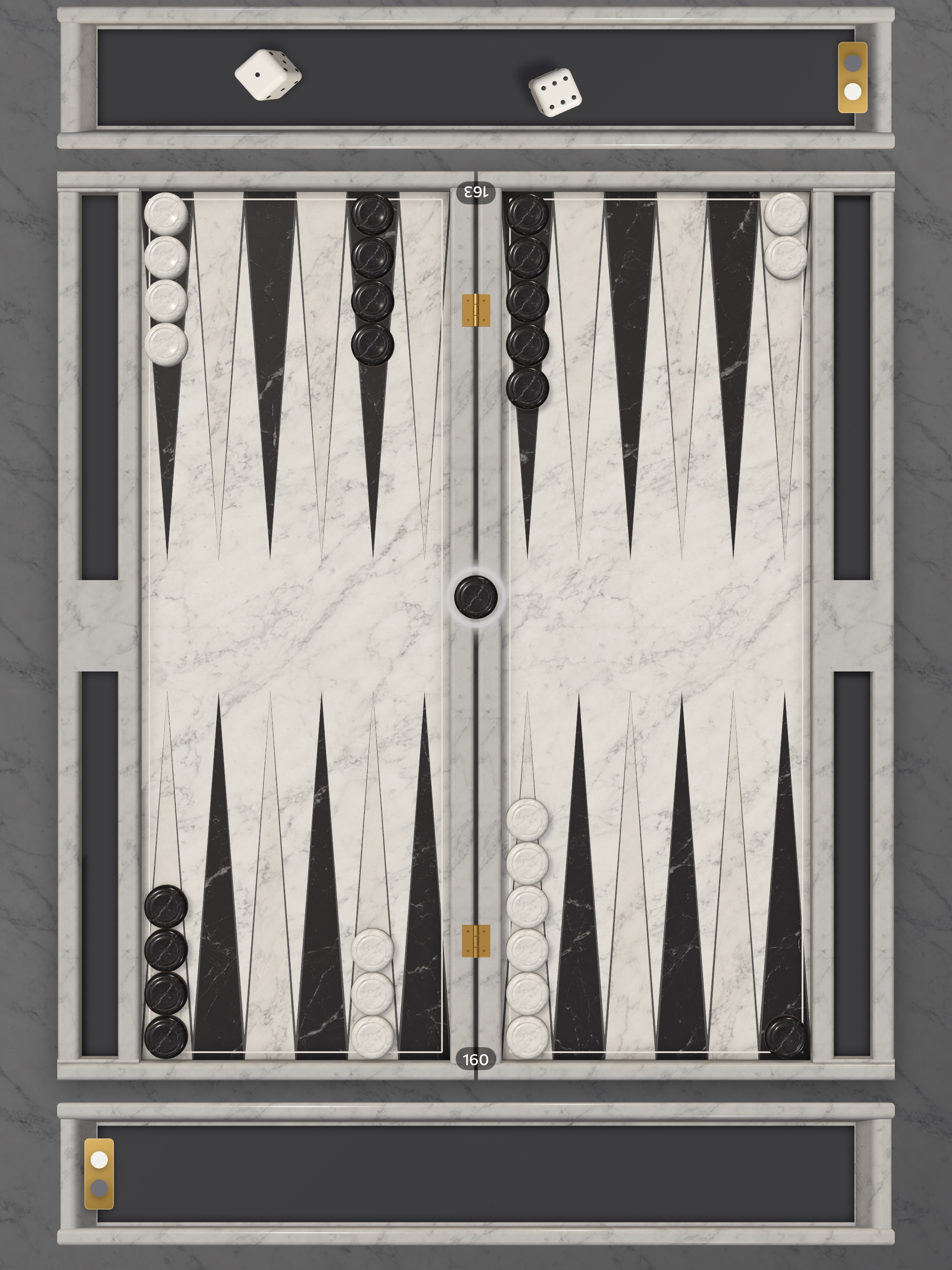
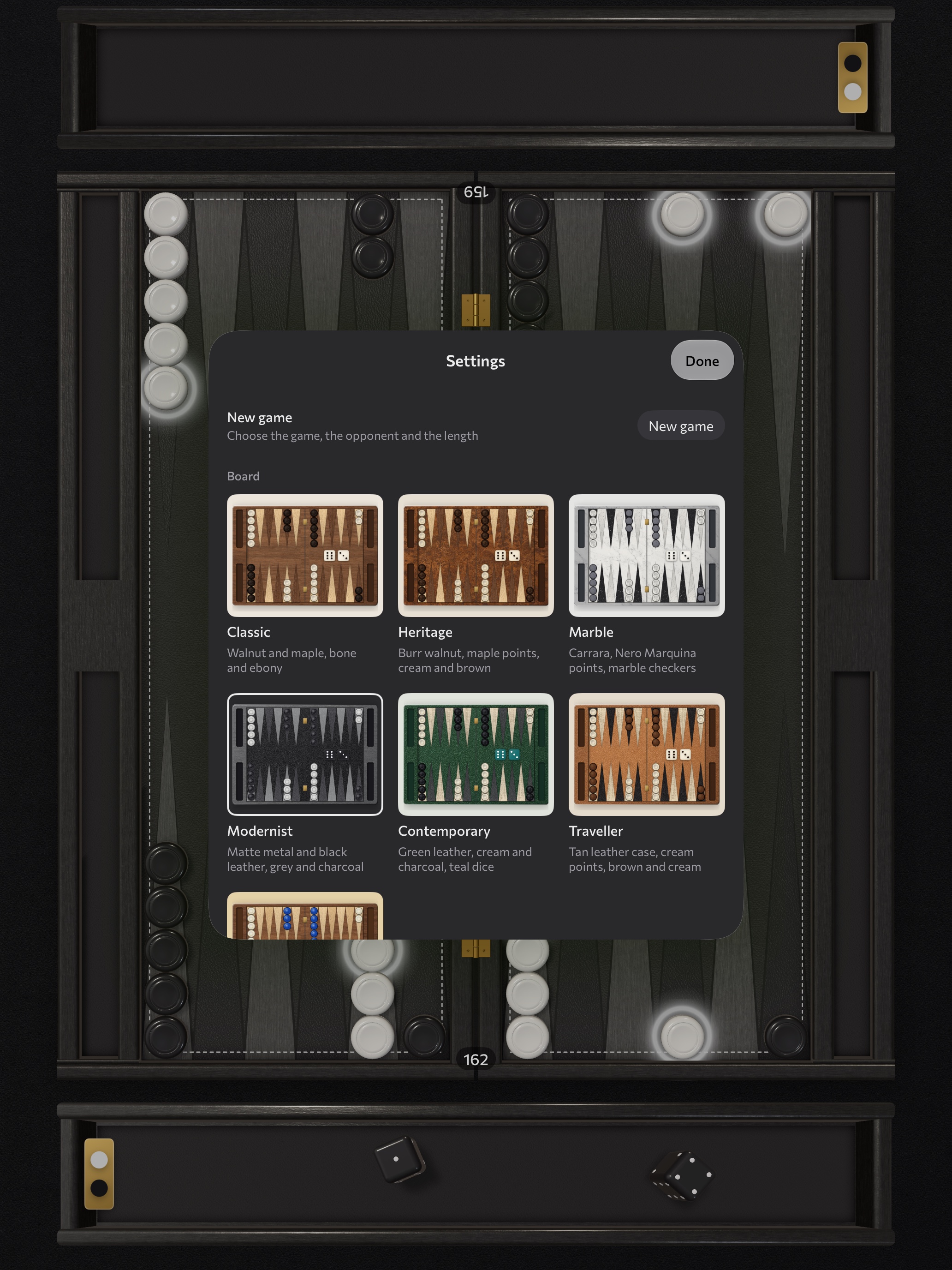
Sizes: phone 1320 × 2868, iPad 2064 × 2752, iPhone Duo 2853 × 2007. All captured on 19 September 2026 from build 129.
Try it
The build the screenshots come from is open to press through TestFlight: join the Tavli beta. Install Apple's TestFlight app first. It is the launch build in everything but the Turkish store listing, which is waiting on a native reader.
App preview
Twenty-nine seconds of a game of portes on the Classic board, recorded from the build above. No music, no captions: use it whole, or take any part of it.
Download the preview (MP4, 660 × 1434, 29 seconds). Ask if you want it at the full 1320 × 2868.
The facts
| Name | Tavli |
|---|---|
| Subtitle | Portes, plakoto and fevga |
| Developer | Dimitris Kontaris Creative Limited, London, United Kingdom |
| Release | Planned for Friday 23 October 2026, the iPhone Duo's launch week |
| Price | Free to download. One in-app purchase, Full tavli, £5.99 (other storefronts equalised by Apple) |
| Free without paying | Portes against the computer, pass-and-play in all three games, the Classic board |
| Platforms | iPhone, iPhone Duo and iPad. iOS 27 or later |
| Languages | English and Greek |
| Age rating | 4+ |
| Category | Games: Board, Strategy |
| Multiplayer | Two players on one device, and turn-based matches through Game Center |
| Accessibility | VoiceOver throughout, Dynamic Type, Reduce Motion, Increase Contrast, Differentiate Without Colour |
| Privacy | No accounts, no analytics, no advertising, no data collected |
| Credits | Designed and built by Dimitris Kontaris. Portes computer play by wildbg, open source |
| Press contact | tavli@dkcreative.uk |
Boilerplate
Dimitris Kontaris Creative Limited is a one-person studio in London making apps that do one thing and keep it on your device. Its apps are sold once, with no subscriptions and no advertising, and collect nothing about the people who use them.
Get in touch
Email tavli@dkcreative.uk for a TestFlight build, artwork at any size, or anything here in Greek.